Active magnetic bearings
Position feedback and electromagnetic force maintain controlled rotor levitation during operation.
Technology architecture
Active magnetic bearings support the rotor without an oil-lubricated bearing system, while the compressor, drive and bearing controls operate as one engineered platform.
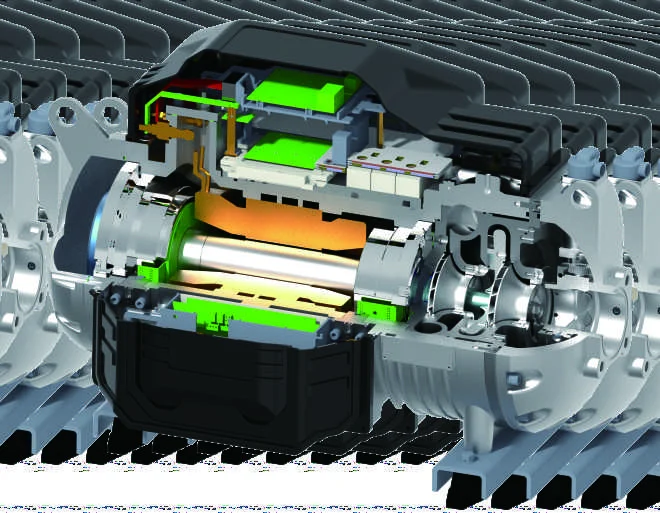
Catalog cutaway · explanatory architecture image
Inside the platform
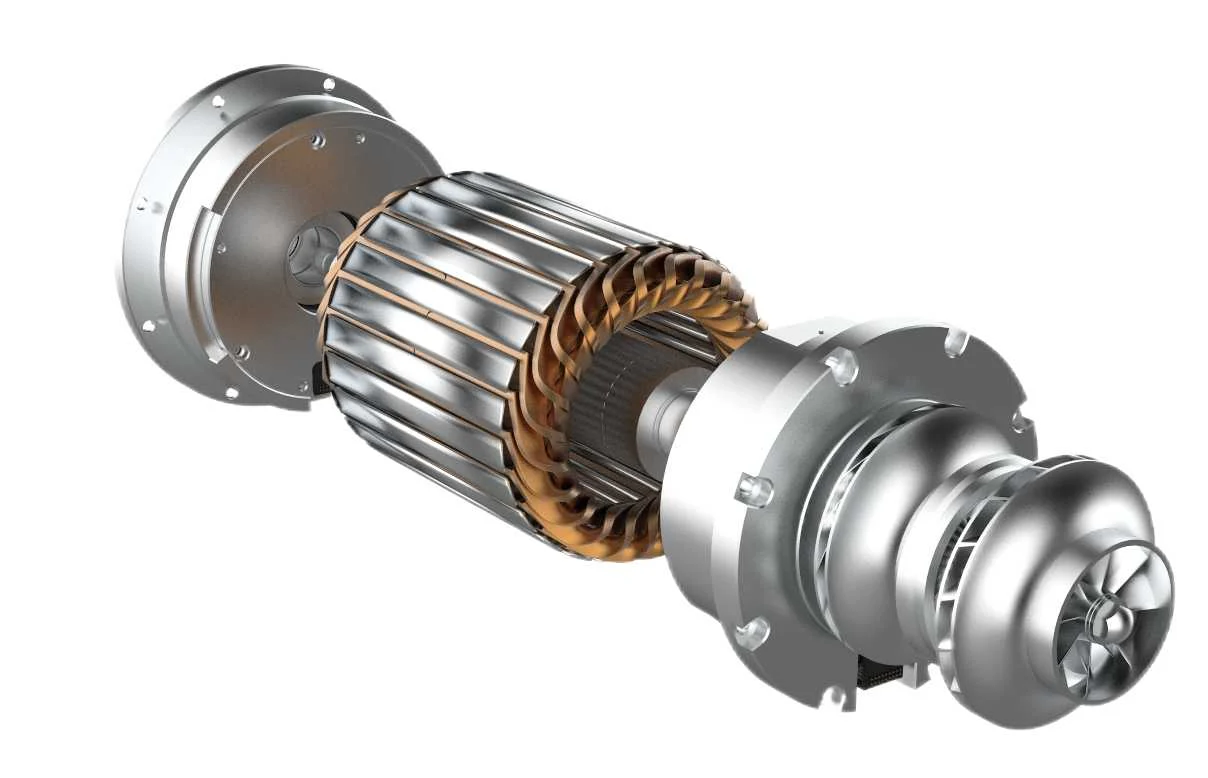
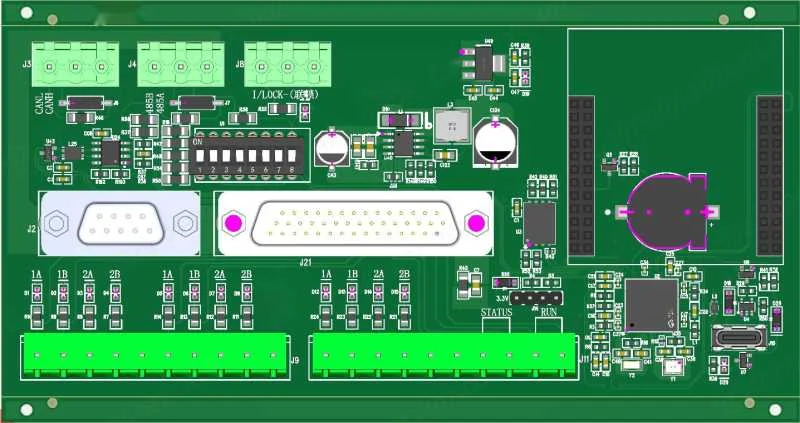
Catalog technical images show the rotor train, an integrated cutaway and a control board. They explain architecture, but they are not manufacturing or wiring drawings.
Four linked layers
Each layer must be considered together during OEM selection, system controls design and validation.
Position feedback and electromagnetic force maintain controlled rotor levitation during operation.
Catalog-described two-stage architectures support the published S, T and H product families.
The catalog presents the drive, compressor and bearing controls as an integrated control architecture.
A self-generation approach is described for controlled deceleration and zero-speed landing after power loss.
Control sequence
This simplified loop explains the role of an active magnetic-bearing controller. Project documentation defines the actual control and protection implementation.
Sensors monitor rotor displacement relative to the commanded position.
The bearing controller evaluates the feedback signal and operating state.
Electromagnet current is modulated to maintain controlled levitation.
Evidence boundary
The current product catalog includes component-level values for bearing loads, motor speed, sensor response and levitation precision. These are supplier-published values until paired with a model, test condition, method and report.
Read our source policyEngineering documentation
Request the performance, controls, electrical and mechanical documents relevant to your platform review.
Review integration inputs